The short version
- Run the numbers first: pet fee, amenity cost, extra cleaning time, and a damage reserve.
- Write a clear policy covering species, size, number of pets, and where pets can and cannot go.
- Service animals are not pets. Under the ADA they cannot be charged a pet fee. Confirm details with counsel.
- Designate rooms, flag them in your PMS, and give housekeeping a written pet room checklist.
- Design the amenity program early. Product lead time is usually the longest part of the launch.
- Name and brand the program so it shows up as a reason to book, not a fee on the folio.
Do the math before anything else
A pet program works when the fee covers what pets actually cost you. Before writing the policy, put real numbers against each line:
| Line | What to estimate |
|---|---|
| Revenue | Pet fee per night or per stay, plus any pet package or retail sales |
| Amenity cost | Landed cost of the welcome kit, plus the bed and bowls spread over their useful life |
| Housekeeping | Extra cleaning minutes per pet stay, and laundry for bed covers |
| Damage reserve | A small amount per stay set aside for the occasional chewed chair or carpet clean |
| Marketing | Listing updates, photography, and any promotion of the program |
Then ask the question that matters: how many extra room nights does the program need to win to pay for itself? Pet owners often choose a hotel because it welcomes their dog, so the real upside is usually bookings you would not have had, not the fee.
Write the pet policy
A good policy is short, specific, and easy for the front desk to enforce. Cover these points:
- Which animals. Dogs only, or dogs and cats.
- Size and number. Weight limits, if any, and how many pets per room.
- Fees and deposits. Per night, per stay, or a refundable deposit.
- Where pets can go. Lobby, patio, restaurant, pool area, and which spaces are off limits.
- Unattended pets. Whether pets can stay alone in the room, and for how long, and what happens if there is a noise complaint.
- Damage. How damage is documented and charged.
Put the policy on your website, in your booking engine, and on your OTA listings, and use the same wording everywhere.
Service animals are not pets
In the United States, the Americans with Disabilities Act treats service animals differently from pets. In general, a hotel cannot charge a pet fee for a service animal or restrict it to pet rooms, though guests can be charged for actual damage. Emotional support animals are treated differently under the ADA. The rules have details and exceptions, so have your attorney review your policy and train the front desk on the two questions staff are allowed to ask.
Choose and prepare the pet rooms
- How many. Start with a small share of inventory and expand based on demand.
- Where. Ground floor or near an exit makes walks easier and keeps barking away from other guests.
- Surfaces. Hard floors or durable carpet, and furniture fabrics that clean easily.
- System flags. Mark pet rooms in your PMS so housekeeping, maintenance, and allergy sensitive guests are all handled correctly.
Housekeeping procedures for pet stays
Housekeeping is where pet programs succeed or fail. Give the team a written checklist for every pet checkout:
- Remove and launder the bed cover and any blankets. Wipe the liner.
- Vacuum with a pet hair attachment, including under furniture and along baseboards.
- Check for damage and photograph it before the room is turned.
- Clean and sanitize bowls, or replace them.
- Restock the room with a fresh cover and the next welcome kit.
Budget extra minutes for pet rooms. The bed design matters here: a bed with a removable cover and waterproof liner turns in minutes. A bed without them becomes a disposal problem.
Design the amenity program
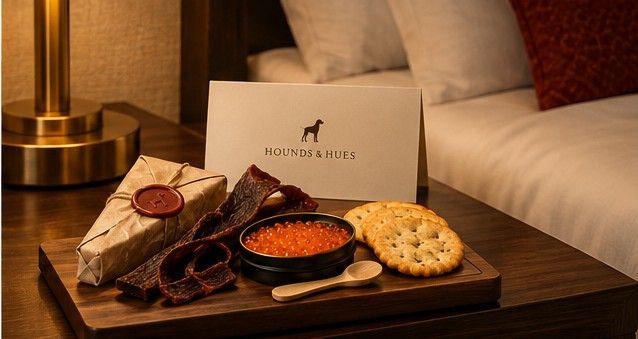
This is the part of the program guests see, and the part most hotels improvise. A complete program has four touchpoints: a welcome kit at check in, a bed in the room, a feeding station, and a retail card that lets guests buy the pieces to take home.
Decide early which pieces are complimentary, which are part of a paid package, and which are for sale. That decision changes the product spec. A bed that stays in the room is built for laundry. A bed that goes home with the guest is built for the shelf.
We cover specs, decoration, and landed cost in detail on the custom hotel pet amenities page.
Name and brand the program
The best known hotel pet programs have names. A name turns a policy into something guests talk about and search for. Give the program its own identity that fits your brand: a name, a small mark, colors that match the room, and the same look across the kit, the bed, and the signage. For groups, a shared program name with property level details works well.
Source it right
Product lead time is the longest part of most launches. Custom programs typically take six to nine months from first call to product in rooms, with sampling as the biggest variable. Every piece can start at 25 units, so a single property can run a custom program, but the earlier you start the design, the more options you have on cost and materials.
Before you buy from any supplier, ask: what is the landed cost per unit, how many wash cycles has the bed been tested to, who owns the design, and what happens when you need to reorder.
Train the front desk
- A short check in script that welcomes the dog by name and explains the pet areas.
- The service animal questions staff can and cannot ask.
- A list of nearby vets, emergency vet hospitals, groomers, and dog walkers.
- What to do when there is a complaint, a bite, or an animal left alone and barking.
Turn the program into revenue
Pet fees are only part of the return. Properties that treat the program like a small retail line earn more from it: a pet package that bundles the kit and a treat, a take home version of the bed, branded bandanas and leashes, and a QR code in the kit that lets guests buy after they get home.
Market it
- Update the pet friendly attribute on Google, your OTA listings, and your booking engine.
- Write a dedicated pet program page on your website with the policy, the amenities, and photos of real dogs in real rooms.
- Encourage guests to share photos of their dogs, and give them a reason to with a kit worth photographing.
- Get listed on pet travel sites and in local dog owner communities.
A 90 day launch plan
| When | What to finish |
|---|---|
| Days 1 to 30 | Run the numbers, draft the policy, have counsel review it, choose rooms, start the amenity design |
| Days 31 to 60 | Housekeeping checklist, PMS flags, front desk training, approve amenity samples |
| Days 61 to 90 | Soft launch with stock or pilot product, update listings, collect guest feedback |
| After launch | Roll out the full custom program as production lands, then review the numbers quarterly |
A policy can launch in 90 days. A fully custom amenity program usually takes longer, so many properties soft launch with pilot product.